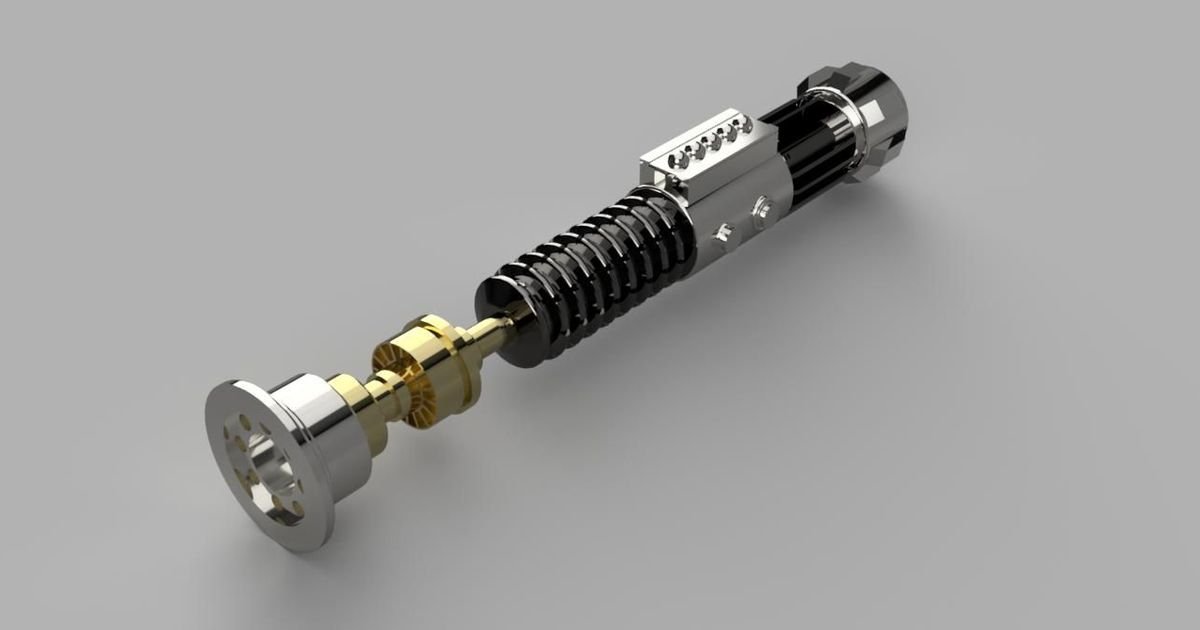
When we talk about the legendary weapons of the Star Wars galaxy, few are as iconic or as deeply tied to a character's journey as Obi-Wan Kenobi's lightsabers. Far from being mere tools, comparing Obi-Wan Kenobi lightsaber models & generations reveals a profound evolution, mirroring his path from impulsive Padawan to a wise, defensive Jedi Master. Each hilt tells a story, a chapter in the life of a warrior whose fighting style and philosophy adapted to the crushing realities of his era.
He wasn't like Anakin, whose single saber design underwent minimal tweaks. Obi-Wan's journey saw him wield three distinct blue-bladed lightsabers, each a testament to his growth, his losses, and his eventual mastery. Understanding these changes isn't just for collectors; it’s for appreciating the meticulous storytelling woven into the very fabric of the Jedi experience.
At a Glance: Obi-Wan's Lightsaber Legacy
- Three distinct lightsabers: Each marking a significant period in his life.
- Consistent blue blade: A classic Jedi hue, symbolizing peace and justice.
- Design evolution: From ornate and aggressive (Padawan) to refined and defensive (Master).
- Reflects combat style: Transitioned from Form IV (Ataru) to Form III (Soresu).
- Loss and Rebuilding: Each lightsaber's demise pushed him to adapt and re-evaluate.
- Inspiring Legacy: His final saber's design influenced Luke Skywalker's iconic weapon.
The Jedi's Evolving Blade: More Than Just a Weapon
For a Jedi, a lightsaber is an extension of their being, a finely tuned instrument of the Force. It's a connection, a discipline, and a symbol. Obi-Wan Kenobi, known for his calm demeanor and mastery of the defensive Form III Soresu, wasn't always so measured. His early years as a Padawan under Qui-Gon Jinn saw him practice the more acrobatic and aggressive Form IV Ataru, a style that suited his youthful energy and the offensive nature of his Master.
The design of a lightsaber often reflects the builder's personality, their preferred combat form, and even their current emotional state. Obi-Wan's sabers are a perfect illustration of this principle, each iteration subtly or overtly different, aligning with his personal evolution. It’s a fascinating study in character development expressed through hardware.
First Blade: The Padawan's Pledge and Qui-Gon's Echo (circa The Phantom Menace)
Every Jedi constructs their own lightsaber as a rite of passage, a crucial step in their training. Obi-Wan's first lightsaber, forged during his Padawan years, was a testament to his connection to his Master, Qui-Gon Jinn.
Design and Aesthetics
This initial lightsaber bore a striking resemblance to Qui-Gon's own weapon. It featured a more ornate, slightly aggressive design, characteristic of the older Jedi aesthetic. The hilt was sleek, with a prominent emitter shroud and a distinctive choke point for improved grip. This shared design philosophy isn't just a coincidence; it speaks to the strong bond between Master and apprentice, a reflection of Obi-Wan's early combat style being heavily influenced by Qui-Gon's Form IV Ataru. The use of an Adegan crystal (in Legends) or a kyber crystal (in Canon) powered its signature blue blade, ready for the fast, sweeping movements of Ataru.
Context and Use
We see this lightsaber in action throughout Star Wars: Episode I – The Phantom Menace. Obi-Wan wielded it with youthful vigor, engaging in rapid exchanges and acrobatic maneuvers. His duel alongside Qui-Gon against Darth Maul on Naboo showcased his developing skills, yet also the immaturity of his control. This saber was a symbol of his early, more aggressive approach to combat, honed under the tutelage of a Master who preferred offense to pure defense.
The Force of Loss: Its Demise
The destruction of this lightsaber was as dramatic as it was pivotal. During the climactic duel with Darth Maul, Obi-Wan's lightsaber was kicked by the Sith Lord into a deep, seemingly bottomless shaft on Naboo. This wasn't just the loss of a weapon; it was a devastating blow that forced him to confront the raw power of the dark side and the ultimate sacrifice of his Master. In the immediate aftermath, Obi-Wan temporarily used Qui-Gon Jinn's lightsaber to defeat Maul, a symbolic transfer of responsibility and a poignant moment that set the stage for his future. This stopgap measure lasted approximately four years, further cementing Qui-Gon's influence on young Kenobi.
Second Blade: A Shadow of the Past, a Hint of Change (circa Attack of the Clones)
Following the events of Naboo, Obi-Wan, now a Jedi Knight and Master to Anakin Skywalker, constructed a new lightsaber. What’s particularly interesting about this second iteration is its design choice.
Design and Aesthetics
Remarkably, Obi-Wan chose to construct a lightsaber that was virtually identical in design to his first. This wasn't laziness; it was a deliberate choice, perhaps out of respect for his lost Master, or a lingering attachment to the design that represented his formative years as a Jedi. It had the same elegant curves, the same emitter shroud, and the same familiar feel. This continuity highlights a period where Obi-Wan was still processing his past, still heavily influenced by the lessons of Qui-Gon, even as he began to forge his own path.
Context and Use
This lightsaber features prominently in Star Wars: Episode II – Attack of the Clones, where Obi-Wan is seen using it during his investigation of the attempted assassination of Senator Amidala and his subsequent journey to Kamino and Geonosis. By this point, Obi-Wan’s combat style was maturing. While still capable of Ataru, the seeds of his eventual mastery of Soresu were evident. He was becoming more deliberate, more focused on defense and counter-attacks, a necessity given the increasing threats facing the Republic. The evolution of Obi-Wan's lightsaber reflects his personal journey, particularly through these tumultuous years.
Confiscation and a Borrowed Blade
The fate of this second lightsaber is less dramatic than its predecessor's, but equally impactful. During his capture by the Separatists on Geonosis, Obi-Wan's lightsaber was confiscated. Its ultimate fate remains unknown, swallowed by the chaos of the nascent Clone Wars. During the ensuing Battle of Geonosis, Kenobi was forced to rely on a borrowed blue-bladed lightsaber, tossed to him by Jedi Knight Sephjet Josall, a testament to the unpredictable nature of war and the Jedi's adaptability.
Third Blade: The Master's Mark – Iconic, Resilient, Defensive (circa Revenge of the Sith, A New Hope, etc.)
It was after the events of Geonosis, recognizing the escalating conflict and his evolving combat philosophy, that Obi-Wan constructed his third and most iconic lightsaber. This weapon would become synonymous with his image as a Jedi Master.
Design and Aesthetics
This lightsaber represented a significant departure from his previous designs. Gone were the more ornate flourishes of the Qui-Gon-inspired hilts. In their place was a more practical, robust, and subtly elegant design. It featured a distinct control box with a prominent red button, a more cylindrical grip, and a less aggressive emitter. This design reflected his full embrace of Form III Soresu, a defensive style focused on economy of motion and impenetrable deflections. The hilt was sturdy, reliable, and perfectly suited for the disciplined, protective movements of a Soresu master. It conveyed a sense of timeless wisdom and readiness.
Context and Extensive Use
This lightsaber saw the most extensive use of all of Obi-Wan's blades, practically becoming an extension of him during his most trying years.
- The Clone Wars: He wielded it against countless adversaries, from the formidable Durge to the agile Asajj Ventress, consistently demonstrating his unparalleled defensive capabilities. It was a beacon of hope and resilience throughout the galaxy-spanning conflict.
- Star Wars: Episode III – Revenge of the Sith: This lightsaber was central to his tragic duel with Anakin Skywalker on Mustafar. The blade, once a symbol of their shared bond, now became the instrument of their devastating separation. His mastery of Soresu allowed him to endure Anakin’s relentless assault, ultimately leading to Vader’s fall.
- Obi-Wan Kenobi (Series): After years of exile and disuse, the familiar blue blade ignited once more, first in self-defense, then in a desperate attempt to protect young Luke Skywalker, and finally, in a cathartic rematch against Darth Vader. This series truly underscored the saber’s role as a symbol of Obi-Wan's enduring commitment to the Jedi path, even in the darkest times.
- Star Wars Rebels: In a poignant confrontation on Tatooine, Obi-Wan used this very lightsaber to swiftly and decisively end Darth Maul's long-standing vendetta, a final act of closure for the ghost of his past.
- Star Wars: Episode IV – A New Hope: Many years later, the same lightsaber made its final appearances in Obi-Wan’s hands. It sliced off Ponda Baba’s arm in Chalmun’s Cantina, a stark reminder of its lethal efficiency. Its ultimate public act was during his final duel with Darth Vader aboard the Death Star, where Obi-Wan sacrificed his life, becoming one with the Force.
A Legacy Beyond Life: Inspiring Luke Skywalker
Perhaps the most enduring legacy of this third lightsaber is its direct influence on Luke Skywalker. In the modern canon, Kenobi's notes and the design of this hilt were crucial inspirations for Luke when he constructed his own green-bladed lightsaber. This connection firmly establishes Obi-Wan's lasting mentorship, even in absence, guiding the next generation of Jedi. It highlights how even after his death, Obi-Wan continued to shape the destiny of the galaxy.
The Final Mystery: Its Fate
The ultimate fate of Obi-Wan's third lightsaber differs between continuities:
- Legends: Darth Vader appropriated the lightsaber after Kenobi's death. However, it was later retrieved by Luke Skywalker and the New Jedi Order from Bast Castle, becoming a historical artifact.
- Modern Canon: Its ultimate fate after Kenobi's death on the Death Star is currently unknown. It’s a lingering mystery, adding to the mystique of the weapon.
Beyond the Hilt: Evolution in Combat and Philosophy
The most compelling aspect of comparing Obi-Wan Kenobi lightsaber models & generations isn't just their appearance, but how each hilt reflects his profound transformation.
From Ataru's Aggression to Soresu's Serenity
His first two lightsabers, with their more elaborate designs, were built during a time when Obi-Wan was still very much an offensive warrior. His initial training emphasized Form IV Ataru, a highly acrobatic and aggressive style perfect for engaging multiple opponents or pressing an attack. These sabers were extensions of that philosophy, designed for fluid, powerful strikes.
However, Qui-Gon's death and the constant warfare of the Clone Wars forced Obi-Wan to evolve. He became a master of Form III Soresu, a defensive lightsaber combat style focused on deflecting blaster bolts and minimizing exposure. Soresu is about control, patience, and wearing down an opponent. His third lightsaber, simpler, more robust, and ergonomically refined, perfectly embodies this shift. It was built for precision deflections, for parries, and for a fighting philosophy that prioritized defense and the protection of others. It was a tool not for attacking, but for surviving and enduring.
A Jedi's Wisdom Forged in Battle
Each time Obi-Wan lost a lightsaber, he didn't just rebuild; he re-evaluated. The loss of his first blade on Naboo was a harsh lesson in humility and the cost of confrontation. The confiscation of his second during the Clone Wars was a stark reminder of the perils of war and the need for constant adaptability. These experiences, coupled with the profound loss of his entire Order, refined his philosophy. His lightsabers became symbols of this journey: from youthful exuberance to the quiet, determined resilience of a true Jedi Master.
Obi-Wan's Lightsabers: Frequently Asked Questions
Understanding the subtle nuances of Obi-Wan’s lightsaber history often raises a few common questions. Let's tackle them.
Why did Obi-Wan's lightsaber design change so significantly with his third model?
The significant design change with his third lightsaber reflects Obi-Wan's maturation as a Jedi and his full embrace of Form III Soresu. After the intense conflicts of The Phantom Menace and the onset of the Clone Wars, his combat style became laser-focused on defense, precision, and efficiency. The more practical, robust design of his third hilt was perfectly suited for Soresu, allowing for stable grips and intuitive control during deflections and parries, moving away from the more ornate (and perhaps less practical for constant war) designs of his youth.
Did Obi-Wan really use Qui-Gon Jinn's lightsaber after The Phantom Menace?
Yes, in the immediate aftermath of The Phantom Menace, Obi-Wan used Qui-Gon Jinn's lightsaber. According to the established lore, he utilized it for approximately four years following his Master's death before constructing his second lightsaber. This detail adds a poignant layer to his grief and respect for Qui-Gon.
What happened to Obi-Wan's second lightsaber after it was confiscated on Geonosis?
The exact fate of Obi-Wan's second lightsaber after its confiscation by the Separatists on Geonosis remains unknown. It was lost to the chaos of the early Clone Wars, adding a touch of mystery to its ultimate resting place. He received a different lightsaber from Jedi Knight Sephjet Josall to use during the Battle of Geonosis itself.
How did Obi-Wan's lightsaber influence Luke Skywalker's green blade?
In the modern canon, Obi-Wan's third lightsaber design, along with his personal notes and teachings, directly inspired Luke Skywalker when he constructed his own iconic green-bladed lightsaber. This means elements of the hilt's ergonomics, internal components, or even the philosophy behind its construction were passed down, allowing Obi-Wan to continue guiding Luke even after his physical death. It solidifies the intergenerational connection of the Jedi.
Were all of Obi-Wan's lightsabers blue?
Yes, all three of Obi-Wan Kenobi's distinct lightsabers consistently featured a blue plasma blade. Blue is a common blade color for Jedi, often associated with protection, valor, and the more "guardian" aspect of the Order.
The Enduring Legacy of Kenobi's Blades
Obi-Wan Kenobi's journey is one of immense personal growth, sacrifice, and an unshakeable commitment to the light side of the Force. His lightsabers are not just props in a grand saga; they are artifacts that tell this story. From the hopeful, Qui-Gon-inspired hilt of his Padawan days to the practical, resilient blade of a seasoned Master, each weapon marks a critical juncture in his life.
Understanding comparing Obi-Wan Kenobi lightsaber models & generations allows us to appreciate the subtle yet profound narrative embedded within the Star Wars universe. It’s a testament to how even the smallest details, like a hilt's design, can speak volumes about a character's evolution, their struggles, and their ultimate triumph. These blades are more than mere weapons; they are symbols of the evolving Jedi spirit, reflecting the man who wielded them and the timeless lessons he embodied. To dive deeper into the lore of Obi-Wan's iconic weapon, be sure to Explore Obi-Wan Kenobi's Lightsaber in detail.