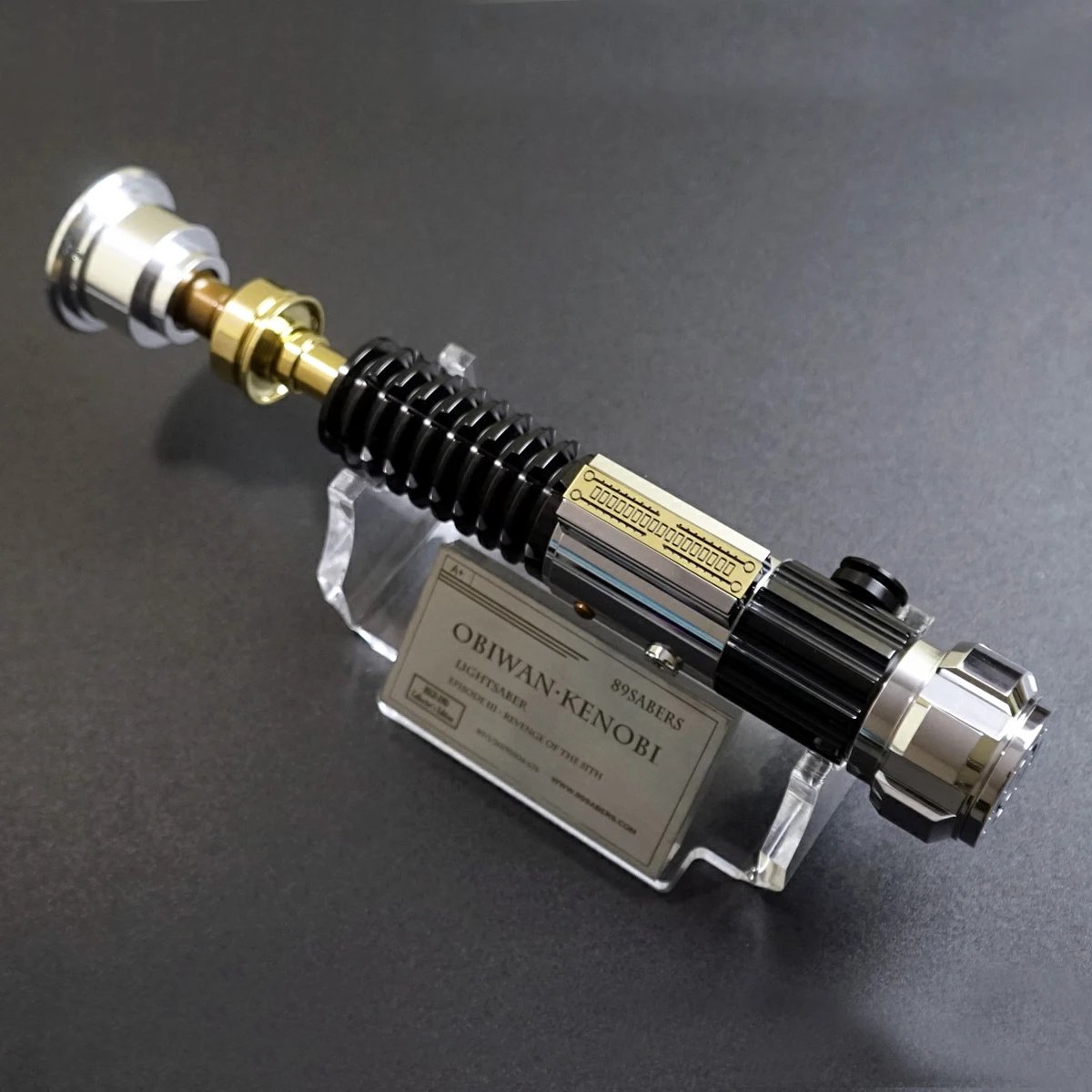
From its graceful ignition in the hands of a young Padawan to its solemn passing to a hopeful Luke Skywalker, Obi-Wan Kenobi's lightsaber has always been more than just a weapon—it's a character in itself. For discerning fans, collectors, and prop makers, the quest for "screen accuracy" in every curve, greeblie, and weathered scuff of Obi-Wan's iconic blade is a serious pursuit. This isn't just about getting the general shape right; it's about meticulously understanding the subtle, and sometimes not-so-subtle, differences in its prop details across various films and series, unraveling the real-world components that brought it to life, and appreciating the craftsmanship behind its enduring legacy.
It’s a deep dive into cinematic archaeology, where every rivet and resistor tells a story.
At a Glance: Unpacking Obi-Wan's Lightsaber
- Evolving Designs: Obi-Wan's lightsaber isn't a single prop; its design subtly changed across the Prequel Trilogy, the Original Trilogy, and the Obi-Wan Kenobi series.
- Real-World Origins: Many of its iconic parts began as everyday (or at least, industrially available) objects, like camera flashguns and vehicle engine components.
- "Greeblies" are Key: Small, non-functional details (greeblies) are crucial for screen accuracy, giving props their realistic, functional look.
- Weathering Tells a Story: Authentic replicas often feature a weathered finish—scuffs, patina, and battle damage—reflecting the weapon's journey.
- Hero vs. Stunt: Filmmakers often use different versions of a prop (hero for close-ups, stunt for action) which can have varying levels of detail and robustness.
- Symbol of the Jedi: Beyond the details, the lightsaber embodies courage, wisdom, and the enduring fight for justice, making accuracy a homage to its significance.
The Evolving Blade: Obi-Wan's Lightsaber Through the Eras
Obi-Wan Kenobi's lightsaber has had a fascinating journey through Star Wars canon, reflecting not only the passage of time within the story but also the evolution of filmmaking techniques and prop design. While often perceived as a single, consistent weapon, attentive eyes will notice distinct differences between its various on-screen appearances. Understanding these iterations is the first step in appreciating screen accuracy.
From the elegant, polished hilt of his younger days as a Padawan and Jedi Master to the battle-worn relic of his exile, the lightsaber adapts, subtly reflecting the changing circumstances of its wielder. This evolution provides a rich tapestry for collectors and prop enthusiasts to explore, with each version offering unique challenges and characteristics for replication.
Phantom Menace / Attack of the Clones: The Elegant "Graflex" Predecessor
When Obi-Wan first ignited his lightsaber as a Padawan in The Phantom Menace, it was an elegant weapon, clearly a product of Jedi craftsmanship. This design carried over, with minor alterations, into Attack of the Clones. What's particularly fascinating about this era's prop is its clear lineage from a classic real-world component: the Graflex flashgun.
The Graflex, specifically the 3-cell model, has an almost legendary status among Star Wars prop enthusiasts, being the basis for Luke Skywalker's lightsaber in A New Hope and a strong inspiration here. For Obi-Wan's hilt, prop designers utilized elements of this flashgun, but heavily customized them.
Visually, the key features of this iteration include a distinctive ribbed grip section, often made of black rubber or plastic, that ran most of the length of the hilt. The emitter was slender and elegant, leading to a blade that appeared stable and powerful. The control box, while present, was less ornate than later versions, featuring simpler buttons and switches. The pommel, too, was relatively straightforward, often featuring a D-ring for attachment to a belt clip.
Between The Phantom Menace and Attack of the Clones, while the core design remained consistent, subtle shifts in prop fabrication and practical effects sometimes led to minor variations. These weren't typically design changes but rather the natural inconsistencies that arise when multiple identical-looking props (hero, stunt, and even pre-production versions) are created and handled during filming. For instance, the exact spacing of the grip ribs or the subtle nuances of the control box detailing might vary slightly from one prop to another, details that hardcore prop hunters meticulously document.
Prop construction for these films often involved machined metal or resin castings, intended to be durable enough for repeated takes while still capturing intricate detail for close-up "hero" shots. The challenge for modern replicators lies in capturing this blend of industrial simplicity and refined Jedi aesthetic, ensuring that the "Graflex heart" of the hilt is recognizable, yet distinctively Obi-Wan's.
Revenge of the Sith: The Most Recognizable Iteration
For many fans, the lightsaber Obi-Wan wielded in Revenge of the Sith is the quintessential Obi-Wan Kenobi hilt. This design is arguably the most refined and iconic iteration of his weapon, symbolizing his mastery as a Jedi and his tragic confrontation with Anakin Skywalker. Building upon the earlier designs, the ROTS hilt introduces several elements that make it instantly recognizable and a favorite for replica makers.
The most striking feature is its "thin neck" aesthetic. Just below the emitter, the hilt narrows dramatically before flaring out again to the main grip section. This elegant, almost fragile-looking design gives the lightsaber a distinctive silhouette, implying precision and balance. However, this thin neck presents a significant engineering challenge for replica makers, especially those aiming for fully functional sabers with electronics, as it limits space and can be a point of structural weakness if not properly designed.
The control box on the ROTS hilt is more intricate than its predecessors, featuring specific "greeblies"—small, non-functional details that add to the prop's sense of realism and complexity. These often include tiny resistors, buttons, and switches, whose exact placement and color are critical for screen accuracy. The main grip section typically features black rubber grips, but unlike the earlier versions, these are often segmented, providing a more ergonomic feel for the actor. The pommel, too, evolved, sometimes incorporating more detailed components or variations in the D-ring attachment point.
The weathered finish on the ROTS prop is also crucial. While the previous hilts were often depicted as relatively pristine, the ROTS lightsaber, especially after prolonged use during the Clone Wars, carries a subtle "lived-in" feel. This weathering includes realistic scuffs and patina, a testament to its long service. According to prop descriptions, this finish is "expertly applied," bringing the weapon to life and making it a standout addition for any collector. It represents not just a weapon, but a symbol of courage and wisdom forged in the crucible of war.
Filmmakers commonly use "hero" props for close-up shots requiring high detail and "stunt" props, often made of lighter, more durable materials, for action sequences. The ROTS lightsaber had both, meaning slight variations might exist. Replicating the ROTS hilt demands attention to all these nuances, from the precise curve of the thin neck to the exact shade of the weathered brass components, to truly capture its on-screen magic.
A New Hope: The "ANH" Kenobi and its Mysterious Origins
When an older, wiser Obi-Wan Kenobi re-emerges in A New Hope, his lightsaber has transformed yet again. This version, often referred to as the "ANH Kenobi" hilt, bears little resemblance to its Prequel Trilogy counterparts. This stark difference isn't due to an in-universe design change, but rather a fascinating piece of real-world prop history.
The original ANH lightsaber prop wasn't a custom-machined piece but a clever assemblage of found parts, a hallmark of early Star Wars prop design. The most iconic components include a Rolls-Royce Derwent jet engine balance pipe for the main body and the grenade section from a World War I-era British rifle grenade (a "No. 3 Mk. 1" percussion grenade) for the emitter shroud. The control box was also unique, often featuring a simple red button and a small black toggle switch. The ribbed grip sections were distinct, often appearing to be rubber strips, and the overall hilt had a more utilitarian, almost industrial aesthetic compared to the polished elegance of the Prequel versions.
Why the dramatic change? In the mid-1970s, prop budgets were tighter, and the resourcefulness of prop masters like Roger Christian led to the ingenious use of existing parts. They simply didn't have the luxury or the necessity to match a prequel design that wouldn't even exist for another two decades. This "found parts" approach gave the original trilogy props a unique, gritty realism that fans adore.
The ANH Kenobi hilt, therefore, represents a different kind of Jedi. It's not the symbol of a flourishing order, but a relic of a bygone era, wielded by a hermit in exile. Its rugged, almost mismatched appearance underscores Obi-Wan's long journey and the hardships he's endured. For collectors, the ANH hilt demands precision in sourcing or replicating these very specific real-world components to achieve true screen accuracy, celebrating the ingenuity of the original prop makers.
Obi-Wan Kenobi Series: Bridging the Gap
The Obi-Wan Kenobi Disney+ series presented a unique challenge and opportunity for prop designers: to bridge the visual gap between the refined ROTS hilt and the distinctly different ANH prop. The series takes place roughly ten years after Revenge of the Sith, portraying Obi-Wan as a disillusioned hermit on Tatooine. His lightsaber, therefore, needed to reflect this period of self-imposed exile and the toll it has taken.
The design team meticulously crafted a prop that pays homage to both the ROTS elegance and the ANH utilitarianism, with a heavy emphasis on a "lived-in" feel. This iteration shows signs of prolonged disuse and the harsh desert environment, evident in its battle damage and extensive weathering. The base design is a clear evolution from the ROTS hilt, retaining the "thin neck" and general proportions, but with significant modifications.
Key updates include more pronounced and intentional weathering, featuring realistic scuffs, dents, and a heavy patina that tells a story of neglect and exposure. The control box, while similar in layout to ROTS, often appears more corroded or damaged. Even the emitter and pommel might show subtle signs of wear and tear, perhaps some missing greeblies or a dulled finish. This weathering is not random; it's deliberately applied to convey history and character, making it a standout addition to any Star Wars collection.
The designers aimed for consistency with the established canon, ensuring that this lightsaber could believably evolve into the ANH version seen years later, even if the ANH prop itself was born from different practical considerations. For fans and prop makers, the Obi-Wan Kenobi series hilt offers a fascinating intermediate stage, demanding a high degree of artistic interpretation in its aging and distressing processes to truly capture its on-screen appearance. It beautifully symbolizes Obi-Wan's courage and wisdom, even in his darkest hours.
Deconstructing Screen Accuracy: What Prop Replicators Obsess Over
Achieving true screen accuracy in a lightsaber replica is an art form, a painstaking process that goes far beyond simply mimicking a shape. It's about understanding the subtle details, material choices, and even the subtle imperfections that bring a prop to life on screen. For dedicated collectors and cosplayers, these nuances are everything.
The "Greeblie" Game: Small Details, Big Impact
"Greeblies" are the small, often non-functional components or textures added to a prop or set to give it a sense of mechanical complexity and realism. Think of the tiny resistors, switches, wires, or circuit board fragments glued onto a lightsaber's control box. While they don't do anything, they make the prop look functional and well-engineered within its fictional universe.
For Obi-Wan's lightsaber, the precise type, size, and placement of every greeblie—from the red button on his ANH hilt to the various resistors and switches on his ROTS control box—are meticulously studied. A single misplaced or incorrect greeblie can instantly break the illusion of screen accuracy for a discerning eye. It's often these minuscule details that separate a good replica from an exceptional one.
Material Matters: The Tactile Truth
The choice of materials significantly impacts a replica's authenticity, feel, and durability. While original props often used a mix of metal, resin, and found parts, modern replicas employ a range of materials:
- Machined Aluminum/Brass: For high-end replicas, these metals are favored for their weight, feel, and cold-to-the-touch realism, closely mimicking the heft of an actual prop.
- ABS-like Resin: As noted by Outer Rim Props, durable resins are excellent for crafting solid, one-piece constructions. They allow for intricate detail, are lightweight, and robust enough for cosplay or display. This material is particularly good for props that were originally cast from molds.
- 3D Printed Plastics (PLA, PETG): Accessible and versatile, 3D printing allows for complex designs. However, surface finishing (sanding, painting) is critical to remove print lines and achieve a convincing metallic or weathered look.
The material chosen affects not just the visual accuracy but also the tactile experience. A heavy, cold metal hilt feels vastly different from a lightweight resin one, influencing how it's handled and perceived.
The Art of the Weathered Finish: Scuffs, Patina, and Battle Damage
A pristine prop can feel artificial. True screen accuracy, especially for weapons that have seen combat or endured years of neglect, demands careful weathering. This isn't just random damage; it's an art.
- Scuffs and Scratches: Strategically applied to areas that would naturally show wear (e.g., edges, control box).
- Patina: The oxidation or aging of metal surfaces (like brass or copper), giving them a duller, richer, or greenish hue. This is critical for the "aged" look of Obi-Wan's ANH hilt or the battle-hardened ROTS version.
- Battle Damage: Deliberate dents, chips, or blaster scoring that tell a story of combat, as seen prominently on the Obi-Wan Kenobi series prop.
The "expertly applied weathered finish" mentioned by Outer Rim Props is a testament to this crucial detail. It makes the weapon feel lived-in, a symbol of honor and bravery that has endured countless struggles, from the Clone Wars to the rebellion.
Proportion and Scale: The Subtle Balance
Even if all the greeblies are correct, incorrect overall proportions or scale can ruin a replica's accuracy. A hilt that's too long, too thick, or has a thin neck that's slightly off can make it feel "wrong" in the hand or against a costume. Prop makers often work from schematics derived from extensive research, including original prop measurements and high-resolution screen grabs, to ensure every dimension is precisely matched.
Hero vs. Stunt vs. VFX: Understanding Prop Types
Filmmakers often create multiple versions of a single prop, each serving a different purpose:
- Hero Props: These are the most detailed and screen-accurate versions, used for close-up shots where intricate details are visible. They are often made of metal or high-quality resin.
- Stunt Props: Made from lighter, more durable materials (like rubber or plastic), these are used for action sequences where actors need to move freely and safely. They often lack fine detail.
- VFX Props: Sometimes, simplified versions or even markers are used for visual effects tracking, with the lightsaber blade and sometimes even the hilt itself added in post-production.
Understanding which version of a prop you're trying to replicate is crucial for screen accuracy, as even "hero" props can have minor variations depending on the shot.
Beyond the Hilt: The Symbolism of Obi-Wan's Lightsaber
While the minute details of screen accuracy fascinate prop enthusiasts, the deeper appeal of Obi-Wan's lightsaber lies in its profound symbolism. It's more than just a collection of meticulously crafted parts; it's a conduit for the values Obi-Wan represents.
As a replica, it embodies "honor, bravery, and the enduring legacy of the Jedi Order," as Outer Rim Props aptly puts it. When you hold a screen-accurate replica, you're not just holding a cool prop; you're connecting with a narrative of courage and wisdom, a fight for justice that spans galaxies. Every scuff, every precisely placed greeblie, and every carefully recreated curve contributes to this feeling of authenticity, making the replica a tangible piece of cinematic history and an emblem of Obi-Wan's unwavering spirit. It's this powerful emotional connection that drives the meticulous quest for accuracy.
Choosing Your Own Legacy: What to Look for in a Replica
For those inspired to own a piece of this legacy, navigating the world of lightsaber replicas can be daunting. With varying levels of accuracy, quality, and price points, knowing what to look for is essential to making an informed choice.
First, consider the era you wish to replicate. Do you prefer the sleek elegance of the Revenge of the Sith hilt, the rugged ingenuity of the A New Hope version, or the battle-worn character of the Obi-Wan Kenobi series prop? Each presents unique visual cues and prop-making challenges.
Next, evaluate material quality and construction. Look for replicas crafted from durable materials that closely match the feel of the original. High-end replicas often use machined aluminum, brass, or even stainless steel, providing a satisfying weight and cold metallic touch. More affordable options, like those made from durable ABS-like resin, can still offer excellent screen accuracy and durability, ideal for cosplay or display without the hefty price tag. As the ground truth highlights, such resins make for lightweight, durable, and solid constructions.
Accuracy levels are paramount. Some makers aim for "museum quality," meticulously reproducing every greeblie, weld mark, and imperfection found on a specific hero prop. Others offer "cosplay grade" replicas that are robust enough for conventions and events, prioritizing durability and overall resemblance over microscopic detail. Always check reviews, community forums, and detailed product photos to ensure the replica meets your personal accuracy standards.
Pay close attention to the weathered finish. Does it authentically capture the scuffs, patina, and battle damage of the on-screen prop? A good weathered finish tells a story and significantly enhances the realism of the replica. This is an area where skilled craftsmanship truly shines, transforming a simple prop into a historical artifact.
Lastly, research reputable makers and vendors. The lightsaber community is vast and passionate, with many experienced artisans specializing in specific hilts. Seek out those with a proven track record of quality and customer satisfaction.
For a comprehensive dive into all things related to Obi-Wan's iconic weapon, including its various incarnations and cultural impact, you might find more insights by exploring All About Obi-Wan Kenobis Lightsaber. This can help you pinpoint the exact details that matter most to you in your own replica hunt.
Common Misconceptions About Kenobi's Blade
- "All Obi-Wan's lightsabers are the same." This is perhaps the biggest misconception. As we've seen, his lightsaber's design underwent significant evolution across the saga, driven by both in-universe events and real-world prop-making limitations. Each iteration has distinct characteristics.
- "The Graflex is the ANH lightsaber for Obi-Wan." While a Graflex flashgun was the basis for Luke Skywalker's ANH lightsaber (and influenced Obi-Wan's Prequel hilts), Obi-Wan's ANH prop was assembled from entirely different "found parts" like a Rolls-Royce balance pipe and a rifle grenade, giving it a unique look.
The Lifelong Quest for Authenticity
The journey to understand and replicate Obi-Wan Kenobi's lightsaber is a testament to the enduring power of Star Wars storytelling and the dedication of its fanbase. It's a quest that merges cinematic history with prop-making artistry, demanding an eye for detail and a reverence for the source material. Every rivet, every shade of weathering, every historical component contributes to a tangible connection with a galaxy far, far away—a connection to a symbol of courage, wisdom, and justice that Obi-Wan Kenobi so powerfully embodies.
Whether you're a seasoned collector or a burgeoning enthusiast, the pursuit of screen accuracy is a rewarding endeavor. It deepens your appreciation for the craftsmanship behind the magic of film and allows you to hold a piece of that legend in your own hands. So, take up your tools, examine those screen grabs, and embark on your own meticulous journey into the prop details of Obi-Wan's lightsaber—the Force, and a wealth of detail, awaits.