The History and Lore of Obi-Wan Kenobi's Lightsabers and His Jedi Journey
Few artifacts in the vast galaxy resonate with as much symbolism and saga-spanning history as a Jedi Master's lightsaber. For Obi-Wan Kenobi, the wise and resilient guardian of the Force, his lightsabers were far more than mere weapons; they were extensions of his being, evolving alongside him through a lifetime of duty, sacrifice, and profound change. From his eager Padawan days to his final stand as a revered Jedi Master, The History and Lore of Obi-Wan Kenobi's Lightsabers tells a story of personal growth, changing galactic tides, and an unwavering commitment to the light.
Let's cut through the hyperdrive static and illuminate the journey of these iconic blades.
At a Glance: Obi-Wan's Lightsabers
- Three Distinct Sabers: Obi-Wan constructed and wielded three unique lightsabers during his life, each marking a different era.
- Blue Blade, Always: All three of his canonical lightsabers featured a radiant blue blade, symbolizing his commitment to peace and his role as a Jedi Guardian.
- Soresu Master: Obi-Wan was a legendary master of Form III (Soresu), a defensive lightsaber combat style that perfectly suited his strategic mind.
- Evolving Design: While his first two sabers were quite similar, his third and final lightsaber showcased a significantly more refined and ergonomic design.
- A Mysterious End: The ultimate fate of Obi-Wan’s final lightsaber remains one of Star Wars' enduring ambiguities.
The Padawan's First Spark: Lightsaber 1 (The Naboo Blade)
Every Jedi's journey begins with the construction of their first lightsaber, a rite of passage that tests both skill and connection to the Force. For young Obi-Wan Kenobi, still a Padawan under the tutelage of the unconventional Master Qui-Gon Jinn, this was a pivotal moment.
He crafted his initial lightsaber with a design that consciously mirrored the elegance and simplicity of his master's own weapon. It was a humble yet sophisticated hilt, reflecting the purity of his early commitment to the Jedi Order. The heart of this saber, like all Jedi weapons, was its kyber crystal. Obi-Wan undertook the sacred journey to the icy planet Ilum, where he bonded with his chosen crystal, which glowed a brilliant blue. This particular hue wasn't arbitrary; it symbolized his dedication to peace, justice, and his emerging role as a Jedi Guardian – a protector reliant on physical prowess and defensive skill.
This first lightsaber accompanied Obi-Wan through his formative years, witnessing countless training exercises and his first true tests. Its most significant, and ultimately final, appearance was during the climactic Naboo Invasion. It was with this blade that he faced the terrifying Sith Lord Darth Maul in a harrowing duel on Naboo. In a moment of intense combat, the lightsaber was tragically lost, kicked into a power generator pit, marking the end of its tenure and a significant turning point for the young Jedi. You can Discover Obi-Wans iconic lightsaber and the intricate details that make each one unique.
The Knight's Resolve: Lightsaber 2 (The Geonosis Blade)
The loss of a lightsaber is a profound event for a Jedi, a separation from a part of themselves. Following the devastating events on Naboo and the loss of his first blade, now-Jedi Knight Obi-Wan Kenobi wasted no time in constructing a replacement.
Perhaps as a testament to his adherence to tradition or a practical choice born of urgency, this second lightsaber was nearly identical in design to his original. It maintained the same elegant simplicity, a familiar extension of his fighting style and personality. This blade became his constant companion through the tumultuous years leading up to and during the Clone Wars, a period that would define him as a Jedi General.
It was with this lightsaber that Obi-Wan engaged in critical missions, from his thrilling pursuit of bounty hunter Jango Fett across Kamino and Geonosis, to his early encounters with the formidable Count Dooku. This lightsaber was a symbol of his growing experience and leadership. However, its fate, much like its predecessor, was sealed by unforeseen circumstances. During the Separatist Crisis, amidst the chaotic Battle of Geonosis, this second lightsaber was unfortunately confiscated by the Geonosians, forcing Obi-Wan to rely on borrowed blades and the quick thinking of his fellow Jedi to survive the arena.
The Master's Legacy: Lightsaber 3 (The Mustafar and Death Star Blade)
With his promotion to Jedi Master and the escalating intensity of the Clone Wars, Obi-Wan Kenobi crafted his third and final lightsaber. This blade represented a significant evolution in his personal design philosophy and a reflection of his matured combat skills.
Unlike its predecessors, this lightsaber featured a noticeably different and more refined design. The hilt was more ergonomic, engineered for faster, more precise combat maneuvers – a crucial adaptation for a Jedi operating on the front lines of a galactic war. It possessed a distinctive style, showcasing the accumulated wisdom and practical experience of a seasoned warrior. This was the saber of a Jedi Master, crafted for efficiency and reliability in the most dire circumstances.
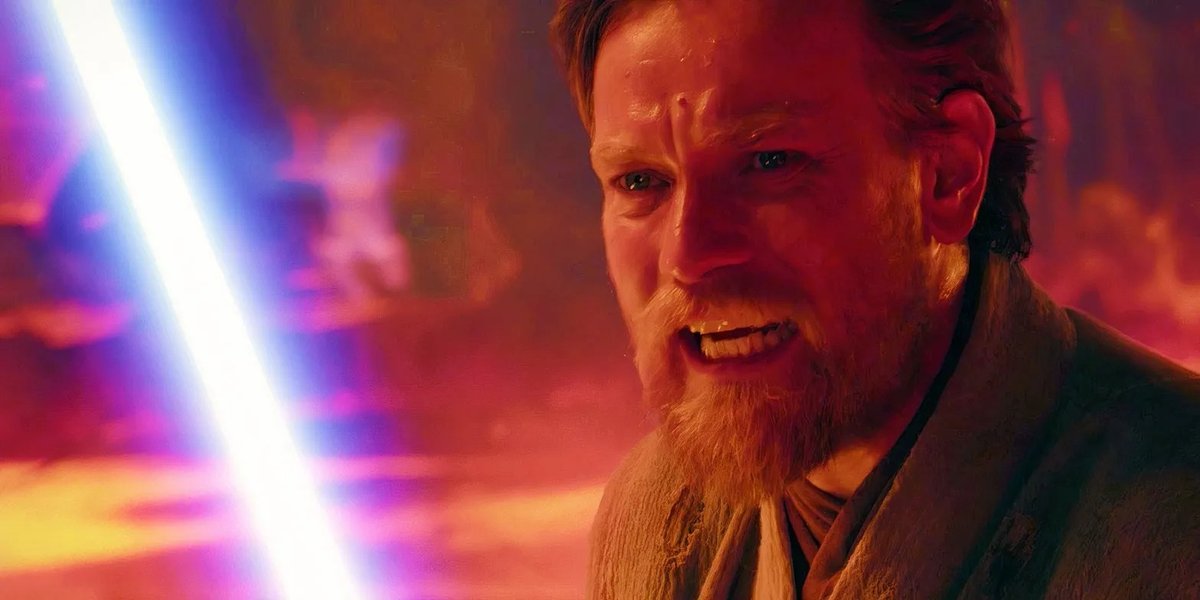
This final lightsaber played a central, often heartbreaking, role in some of the most iconic battles of Obi-Wan's life. It was the weapon he wielded against his fallen apprentice, Anakin Skywalker, in their devastating duel on the fiery plains of Mustafar – a confrontation that tore the galaxy apart and cemented Anakin's transformation into Darth Vader. Years later, as the hermit Ben Kenobi, he drew this very blade one last time in his final confrontation with Darth Vader aboard the Death Star.
Following Kenobi’s self-sacrifice, its fate became shrouded in mystery, adding a layer of legend to an already iconic weapon. Some theories suggest Darth Vader claimed it as a trophy, a memento of his master's ultimate defeat. Others believe it was simply destroyed with the Death Star when Luke Skywalker successfully targeted its weak point. What remains clear in Star Wars canon is that no other character is documented wielding Obi-Wan Kenobi's lightsaber after his death, leaving its ultimate whereabouts tantalizingly ambiguous in official materials.
The Way of the Mynock: Obi-Wan's Mastery of Soresu
Obi-Wan Kenobi wasn't just proficient with a lightsaber; he was a true master, particularly of one specific combat form: Soresu (Form III). Known as "The Way of the Mynock" or "The Resilience Form," Soresu emphasized defensive techniques, prioritizing protection and energy conservation over aggressive offense.
What made Soresu so effective, especially for Obi-Wan?
- Impenetrable Defense: Soresu users focus on precise deflections and parries, creating a virtually impenetrable shield against incoming attacks, whether from another lightsaber or blaster fire. This allowed Obi-Wan to withstand prolonged battles without tiring easily.
- Minimal Effort, Maximum Impact: The form emphasizes fluid, economic movements, allowing the user to deflect attacks with minimal expenditure of energy, making them incredibly difficult to wear down.
- Countering Aggression: By patiently defending, a Soresu master waits for their opponent to overcommit or make a mistake, then capitalizes on the opening with a precise counter-attack.
- Mastering the Unpredictable: Against blaster fire, Soresu was unparalleled. Obi-Wan could deflect barrages back at his attackers or into the environment, turning their offense into their own downfall.
This mastery of Soresu perfectly suited Obi-Wan's temperament and strategic mind. He wasn't a reckless brawler; he was a thoughtful tactician. His ability to outmaneuver aggressive opponents like the whirling dervish General Grievous or the powerful but emotionally volatile Anakin Skywalker was a direct result of his Soresu proficiency. He could weather the storm, frustrate his foes, and then strike with decisive precision when the moment was right.
Beyond the Core: Lightsaber Greeblies and Non-Canonical Tales
While the core narrative of Obi-Wan's three lightsabers is well-established, there are smaller details and alternative stories that add to their mystique.
The Art of Lightsaber Greeblies
If you've ever admired the intricate details on a lightsaber hilt, you've been looking at "greeblies." These are the small design elements and mechanical details – the buttons, knobs, grooves, and vents – added to a lightsaber for both aesthetic and functional purposes. For Obi-Wan's sabers, these greeblies weren't just decorative; they were crafted to enhance his grip, improve usability during combat, and contribute to the overall balance of the weapon. They are the subtle indicators of a master craftsman and a warrior who understands the nuances of his tools.
Journeys into Non-Canon
The official Star Wars canon provides a clear path for Obi-Wan's lightsabers, all featuring a blue blade. However, in the vast universe of "Legends" (formerly the Expanded Universe) and other non-canonical materials, we catch glimpses of slightly different possibilities. For example, in the comic series Star Wars: Jedi – The Dark Side, a young Padawan Obi-Wan is depicted wielding an orange-bladed lightsaber. These non-canon appearances sometimes feature slight design modifications or even enhanced capabilities, offering fans a fun "what if" scenario and exploring the boundless creativity that surrounds the Star Wars saga.
Crafting the Legend: Behind the Scenes of Obi-Wan's Sabers
Bringing Obi-Wan's lightsabers to life on screen requires incredible attention to detail, especially when spanning decades of cinematic history. The recent Obi-Wan Kenobi series on Disney+ provided a unique opportunity to bridge the gap between the prequel and original trilogies, and the prop team embraced this challenge with reverence.
The design aesthetics for Ewan McGregor's lightsaber in the series were carefully blended, incorporating elements from both eras. This wasn't just about recreating props; it was about reflecting the character's growth, his transition from the energetic Jedi Master of the prequels to the weary but resolute hermit of Tatooine. Advanced lighting techniques were employed to create the iconic, vibrant blade glows, ensuring that every swing and clash felt authentic and impactful.
Beyond the props themselves, the magic of Obi-Wan's lightsaber duels is a symphony of performance and sound. John Williams, the legendary composer, contributed significantly, with Obi-Wan’s character theme enriching emotional moments. Both Ewan McGregor and Hayden Christensen (as Darth Vader) underwent intensive training for their lightsaber duels, meticulously choreographed to convey not just physical combat but also the deep emotional weight of their characters' history. The "Obi-Wan Kenobi" series wasn't just about telling a story; it was about honoring a legacy, right down to the last greeblie on a lightsaber hilt.
More Than a Weapon: The Enduring Legacy
Obi-Wan Kenobi's lightsabers, each in its turn, represent more than just elegant weapons for a more civilized age. They are chronological markers, physical manifestations of his journey from a dedicated Padawan to a weary but wise Jedi Master. They bear witness to his triumphs, his heartbreaks, his unwavering dedication, and his ultimate sacrifice.
From the simple, hopeful blade of his youth to the refined instrument of a seasoned warrior, each lightsaber tells a piece of Obi-Wan's story. They underscore his commitment to the Jedi path, his mastery of defensive combat, and his enduring spirit against overwhelming odds. The ambiguity surrounding his final saber's fate only adds to its mythos, ensuring that the legacy of Ben Kenobi and his iconic blue blade continues to spark imagination and discussion across the galaxy.
Next time you watch Obi-Wan Kenobi ignite his blade, take a moment to appreciate the journey it represents—a testament to one of the greatest Jedi in galactic history.